Brand reference — digital brand guidelines, not a public page
Brand · v1.0
Mission, Voice & Rules
The non-visual half of the brand: why cré exists, who it's for, how it should sound, and what to avoid. Colour and type specimens live on the Colours & Type page — this page is the reasoning behind them. Everything below is drawn from the actual research (survey of n=128+ in the north Dublin catchment, the evidence pack, and the founder's own copy), not invented from scratch.
Why cré exists
A neighbourhood we know, a gap that's real
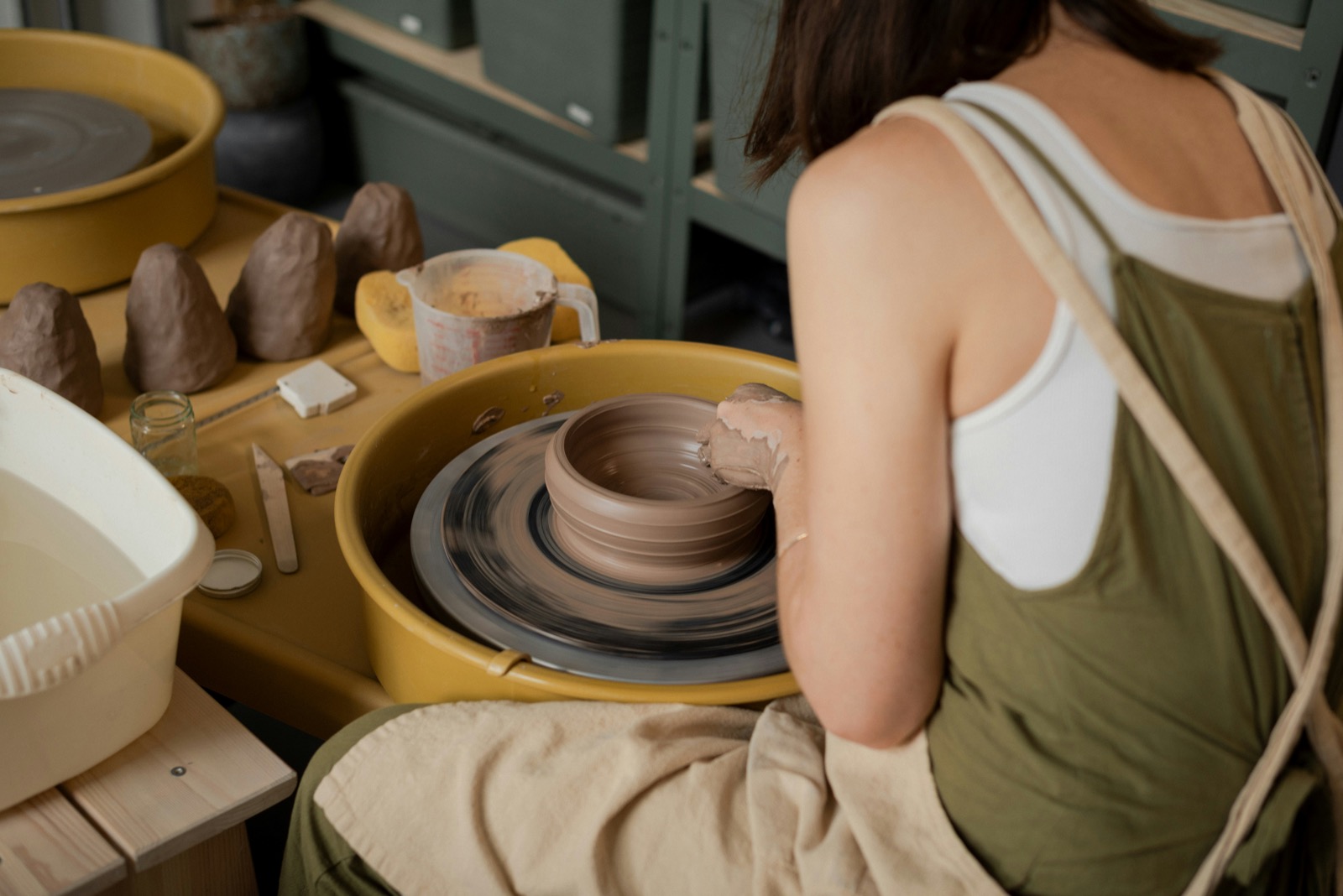
cré is the Irish word for clay. It's an open-access ceramics studio for Dublin's Northside, opening because that's where we live and work: Phibsboro, Drumcondra, Marino, East Wall, Glasnevin, Grangegorman — a part of the city that's growing fast, with a community of makers who shouldn't have to cross the city to find a proper studio. No open-access community studio exists there today; Throwing Shapes, the closest comparable, only serves the southside.
Beginners welcome, on purpose. Plenty of pottery spaces expect you to already know what you're doing. cré is built for the person who's never touched clay as much as the one who's been throwing for years — and it's meant to stay that way as it grows: beginners and working artists in the same room isn't a tension, it's the point.
Who it's for
Three people, from the survey and the vision
Two personas map to demand that already exists in the survey data; the third maps to where cré is headed once membership is established. Full detail, including reach/targeting notes, is in the Investor Room evidence pack.
1. The total beginner
Stress relief, 62% · biggest deterrent: a cliquey room, 51.6%
Wants to try clay without a big up-front commitment, and to feel welcome regardless of skill level. Her top frustration isn't cost, it's studios that assume prior experience or make her feel like the "wrong" type of person in the room.
Comes for who else is in the room, often via a team event or a friend. Wants a "third place" close to home and an easy way to book as a group, not a studio that feels transactional.
3. The working artist
Future audience · not sampled directly in the survey
Doesn't need a class, needs a kiln she can rely on: dedicated time and equipment without leasing a private studio, and to be treated as more than a hobbyist. This is who cré grows toward once the beginner base is established.
Voice & tone
How cré sounds
Each rule below is tied to a specific finding, not a vibe.
Never make anyone feel like the wrong type of person
Lead with "no experience needed," not skill. Avoid any copy that assumes prior knowledge or insider terms without explaining them.
Grounded in survey data
51.6% of respondents named "a cliquey room" as their top deterrent; 38.3% cited teachers dismissive of beginners; 18.0% said they'd feel like the "wrong" type of person. This is the single biggest voice risk in the brand.
Plain-spoken, a little wry — never precious about craft
"Wheels, kilns, and classes for every level. No experience needed to start." Class names carry the humour (Thrown Together, In a Pinch, Well Grounded, Second Wind) so the surrounding copy can stay simple and direct.
Grounded in existing site copy
Pulled directly from the site's own hero lines and class names — the pun-driven naming convention is already the brand's clearest voice signal and should be extended, not diluted with corporate-sounding class titles.
Warmer and more social for consumer pages, plainer for numbers
Marketing pages (classes, about, membership) can be warm and personal. The Investor Room stays direct and unembellished: real percentages, sourced claims, and explicit caveats where data is illustrative rather than verbatim.
Grounded in existing site structure
The evidence pack already labels illustrative persona quotes as "not a verbatim quote" rather than presenting them as real testimonials — keep that discipline anywhere research is cited.
A little Irish, used sparingly, with the English beside it
A few Irish words add warmth and a sense of place: "Slán" (bye), "Go raibh maith agat" (thank you). Use one short phrase at most per page or email, as a greeting, thank-you or sign-off. Put the English in brackets straight after it, so nobody has to know Irish to follow along. Keep the fadas (accents) exactly as written.
Grounded in the first rule above
The English in brackets keeps everyone included, in line with never making anyone feel like the wrong type of person. Keep Irish out of anything people need to act on, such as prices, dates and cancellation terms.
Everyday Irish turns of phrase, the way a neighbour would say them
Light, familiar Hiberno-English suits cré: "grand" (all good), "go on" (yes, do), "the craic" (good fun), "sláinte" (cheers). Write them the way people really say them, once or twice on a page at most, and add the meaning in brackets when someone new to Ireland might not know it. This counts toward the same one-phrase limit as the Irish above.
Grounded in who we are talking to
Some of our classes, such as New Digs, are built for people who have just arrived in Ireland. A short gloss keeps them in the conversation. Keep it natural and never theatrical: no "top o' the morning", no shamrocks, no leprechauns.
Do's and don'ts
Quick reference
Do
Write "cré" lowercase, always, even at the start of a sentence
Use Bely Display only for headings, secondary display text, and quotes
Colour icon marks with currentColor/CSS background-color through a mask, so they always match the section they sit in
Say "no experience needed" before anything about skill or ability
Label illustrative or estimated data as such, next to the number
Use at most one short Irish phrase per page or email, with the English in brackets straight after it
Keep everyday Irish turns of phrase natural and light, and gloss them for newcomers
Don't
Capitalise or accent-drop "cré" (no "Cré", no "cre")
Set body copy or long passages in Bely Display — it's a display font, not a reading font
Ship a brand mark as a fixed-colour PNG/JPEG when an SVG mask will do
Write copy that assumes the reader already knows pottery terms or has "done this before"
Present a survey-derived persona quote as a real, verbatim customer quote
Use Irish for prices, dates or terms, or leave a phrase without its English
Lean on stage-Irish clichés such as "top o' the morning" or leprechaun imagery